



Chain Weapons - Kusarigama, Flails, Chain Whips & Bolas
-
 🔍︎ QUICK VIEW
-
 🔍︎ QUICK VIEW
-
 🔍︎ QUICK VIEW
$74.95
🔍︎ QUICK VIEW
$74.95 -
 🔍︎ QUICK VIEW
-
 🔍︎ QUICK VIEW
-
 🔍︎ QUICK VIEW
-
 🔍︎ QUICK VIEW
-
 🔍︎ QUICK VIEW
$20.95
🔍︎ QUICK VIEW
$20.95 -
 🔍︎ QUICK VIEW
$19.95
🔍︎ QUICK VIEW
$19.95 -
 🔍︎ QUICK VIEW
$26.95
🔍︎ QUICK VIEW
$26.95 -
 🔍︎ QUICK VIEW
-
 🔍︎ QUICK VIEW
-
 🔍︎ QUICK VIEW
-
 🔍︎ QUICK VIEW
 (5)
(5) (1)
(1) (3)
(3)Chain Weapons - Kusarigama, Flails, Chain Whips & Bolas
Chain weapons bring a level of motion and unpredictability that makes training both challenging and exciting. These tools use flexible connections like chains or cords to generate speed and striking angles that rigid weapons simply cannot match. Because they rely on momentum and technique instead of raw strength, mastering them helps improve coordination, spatial awareness, and timing. At KarateMart.com, we offer a wide range of martial arts chain weapons suited for collectors, traditional students, and anyone looking to expand their skills with something more advanced.
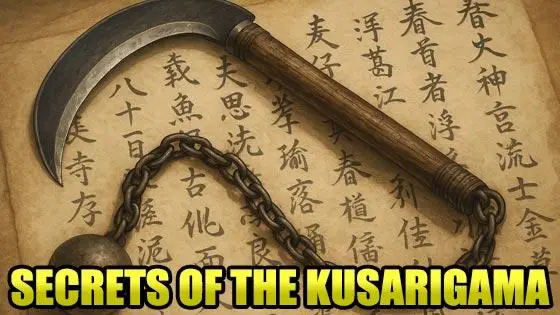
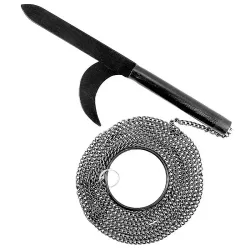
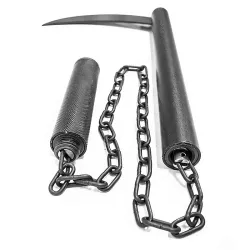
One of the most recognizable options in this category is the Japanese kusarigama, which combines a sharp sickle with a weighted chain. Skilled handlers can swing the chain to control distance, trap limbs, or disarm a weapon before closing in to finish with the blade. This design became popular in samurai and ninja training because it supports both long and close range techniques within a single weapon.
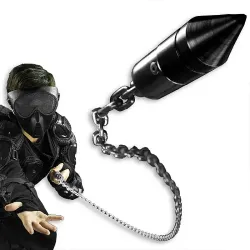
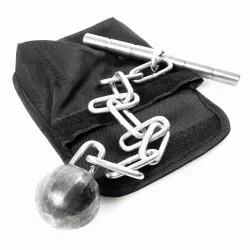
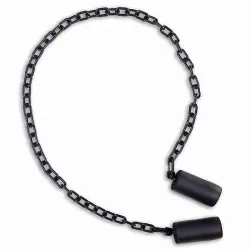
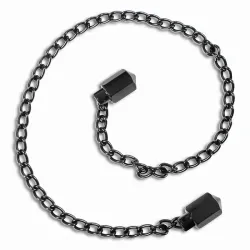
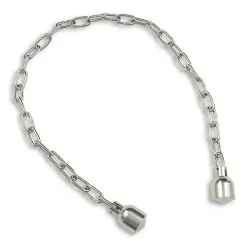
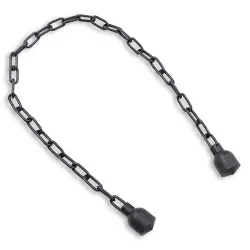
Weighted chain weapons also evolved into more compact forms like the manriki gusari. This shorter chain features a weight on each end and is known for its versatility and concealability. Instead of cutting, its techniques revolve around joint locks, pressure strikes, and trapping motions that reward precision and body control.
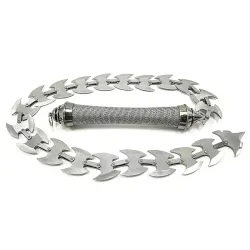
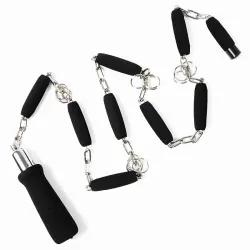
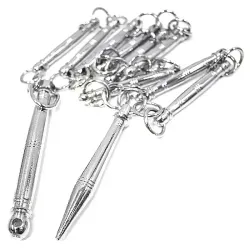
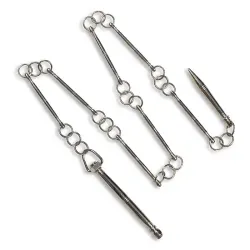
Chain whips play a major role in Chinese martial arts, especially in wushu and kung fu. These weapons consist of several metal sections linked together, giving them incredible mobility once they are in motion. With practice, a chain whip can wrap around the body, change direction instantly, and strike from angles that are hard for opponents to predict or defend against. Training versions often include cloth flags that make movement easier to track during demonstrations and skill-building.
Although chain weapons are often associated with Asian martial arts, other cultures developed similar tools with their own strengths. Medieval flails use the force of a swinging metal weight to deliver powerful impacts that can bypass shields and armor. Even bolas, which were originally designed for hunting, demonstrate how chained weights can restrict an opponent's movement by wrapping around their legs during a well-placed throw.
Our chain weapons selection includes detailed metal designs for display or advanced practice, along with safer training models that allow beginners to build confidence before increasing speed or weight. Whether you are studying historical combat techniques, learning martial arts weapon forms, or expanding your personal collection, these flexible weapons offer a unique challenge that rewards patience and precision.
Before trying any chain weapon, make sure you receive proper instruction and use safety equipment to reduce the risk of accidental injury. Once you understand how to control the momentum and flow of the weapon, training becomes smoother and more satisfying. Browse our lineup of chain whips, kusarigama weapons, manriki chains, bolas, and flail styles to find the tool that fits your experience level and interests.
Chain weapons are considered advanced martial arts tools because they move independently from the user. They require good coordination and spatial awareness to control safely. Beginners can still learn them with proper guidance, but starting with a training version such as a foam chain whip or a lighter manriki chain is recommended before moving on to heavier or bladed designs.
The manriki chain or kusari fundo is often the easiest starting point because it is shorter and easier to track during movement. It allows you to practice swinging, wrapping, and basic striking techniques without the long momentum arc of a chain whip. Once you are comfortable with timing and control, you can transition to more advanced weapons like a steel chain whip or kusarigama.
Ninjas used several types of chained weapons due to their versatility and concealability. Historical accounts and martial arts traditions include tools like the kusarigama, manriki chain, and chain darts similar to the kyoketsu shoge. These weapons allowed disarming, entangling, and fast strikes while still being easy to hide or disguise as everyday items.
Chain weapon legality varies by location, similar to nunchaku and other martial arts weapons. Some regions classify weapons like kusarigama and chain whips as restricted items, while others allow them for training and collecting. Always check your local laws before purchasing or carrying a chain weapon, and follow safety and transport guidelines to ensure responsible ownership.
A chain whip is made of multiple metal segments linked together, allowing long range striking and fast directional changes. A manriki chain is shorter and weighted at both ends, making it better for joint locks, close range strikes, and wrapping techniques. Both rely on timing and flow, but they are used in different martial arts systems and serve different purposes in training.
Flails and maces are often confused, but they use very different mechanics. A flail weapon features a striking head connected to the handle with a flexible link like a chain. This allows the head to swing with significant momentum and curve around shields or defensive blocks. Because the chain can accelerate and change direction rapidly, flails are powerful but harder to control. Some were designed for one hand, while larger agricultural variants evolved into longer two-handed battlefield weapons based on grain-threshing tools.
A mace is a completely solid weapon. Its rigid shaft and fixed metal head create direct, focused impact that can punch through armor. Historically, maces were widely used by knights and soldiers because they were easier to handle in chaotic combat. Many featured flanges or knobs to concentrate force into smaller points. Clerics in medieval Europe sometimes carried maces because blunt weapons did not technically "shed blood."
A simple way to tell the difference is to look at the connection. If the striking head bends or swings on a chain, it is a flail. If it is stiff and solid from end to end, it is a mace. Both played important roles in history, but flails stand out because of their unpredictable motion and distinctive chain-driven design.
The kusarigama is unique among chained weapons because it combines a traditional farming sickle, called a kama, with a chain and a heavy iron weight. Most other chained weapons, such as the manriki-gusari (weighted chain) or the nunchaku, do not include a bladed component. Instead, they rely solely on striking, trapping, or entangling techniques. The kusarigama's curved blade gives it the ability to cut and slice in addition to the long-range attacks possible with the chain, making it one of the most versatile and complex Japanese martial arts weapons.
Because of its dual design, the kusarigama requires a different skill set compared to other chain-based weapons. Practitioners must learn how to manage the range of the swinging chain while also controlling the blade for close combat. This balance of long-distance and short-distance fighting is what sets the kusarigama apart from simpler chained weapons and why it holds such a prominent place in martial arts history.
Yes, the kusarigama is often referred to as a "chain and sickle" weapon, but the Japanese term has a more specific meaning. The word "kusarigama" comes from "kusari", meaning chain, and "kama", meaning sickle. Unlike a simple farm sickle tied to a rope, the traditional kusarigama was carefully constructed with a forged metal kama blade, a sturdy length of chain, and an iron weight attached to the end. This made it a highly effective weapon in the hands of skilled samurai and ninja.
Over time, the phrase "chain and sickle" became a way to describe the kusarigama in English, but the weapon itself is more advanced than the literal translation suggests. The weighted chain was used for striking, trapping, and disarming, while the sickle provided cutting power at close range. Together, these elements made the kusarigama one of the most feared and versatile chained weapons in Japanese martial arts.
The kusarigama was used by both samurai and ninja, though often for different purposes. Historical records show that certain samurai martial arts schools, or koryu, included kusarigama techniques as part of their training. In these systems, the weapon was studied as a battlefield tool, teaching warriors how to control the distance of an opponent with the chain while finishing with the sickle in close combat.
Ninja, on the other hand, are believed to have valued the kusarigama for its versatility and unpredictability. The weapon could be concealed or disguised as a farming tool, which suited the ninja's emphasis on stealth and deception. Its long chain allowed for surprise attacks, disarming, and entangling, while the sickle could be used in quick, decisive strikes. Because of this dual use, the kusarigama became associated with both ninja strategy and samurai martial tradition, making it one of the most iconic chained weapons in Japanese history.
One of the most recognizable options in this category is the Japanese kusarigama, which combines a sharp sickle with a weighted chain. Skilled handlers can swing the chain to control distance, trap limbs, or disarm a weapon before closing in to finish with the blade. This design became popular in samurai and ninja training because it supports both long and close range techniques within a single weapon.
Weighted chain weapons also evolved into more compact forms like the manriki gusari. This shorter chain features a weight on each end and is known for its versatility and concealability. Instead of cutting, its techniques revolve around joint locks, pressure strikes, and trapping motions that reward precision and body control.
Chain whips play a major role in Chinese martial arts, especially in wushu and kung fu. These weapons consist of several metal sections linked together, giving them incredible mobility once they are in motion. With practice, a chain whip can wrap around the body, change direction instantly, and strike from angles that are hard for opponents to predict or defend against. Training versions often include cloth flags that make movement easier to track during demonstrations and skill-building.
Although chain weapons are often associated with Asian martial arts, other cultures developed similar tools with their own strengths. Medieval flails use the force of a swinging metal weight to deliver powerful impacts that can bypass shields and armor. Even bolas, which were originally designed for hunting, demonstrate how chained weights can restrict an opponent's movement by wrapping around their legs during a well-placed throw.
Our chain weapons selection includes detailed metal designs for display or advanced practice, along with safer training models that allow beginners to build confidence before increasing speed or weight. Whether you are studying historical combat techniques, learning martial arts weapon forms, or expanding your personal collection, these flexible weapons offer a unique challenge that rewards patience and precision.
Before trying any chain weapon, make sure you receive proper instruction and use safety equipment to reduce the risk of accidental injury. Once you understand how to control the momentum and flow of the weapon, training becomes smoother and more satisfying. Browse our lineup of chain whips, kusarigama weapons, manriki chains, bolas, and flail styles to find the tool that fits your experience level and interests.
Are chain weapons good for beginners?
Chain weapons are considered advanced martial arts tools because they move independently from the user. They require good coordination and spatial awareness to control safely. Beginners can still learn them with proper guidance, but starting with a training version such as a foam chain whip or a lighter manriki chain is recommended before moving on to heavier or bladed designs.
Which chain weapon is easiest to learn first?
The manriki chain or kusari fundo is often the easiest starting point because it is shorter and easier to track during movement. It allows you to practice swinging, wrapping, and basic striking techniques without the long momentum arc of a chain whip. Once you are comfortable with timing and control, you can transition to more advanced weapons like a steel chain whip or kusarigama.
What chain weapons did ninjas use?
Ninjas used several types of chained weapons due to their versatility and concealability. Historical accounts and martial arts traditions include tools like the kusarigama, manriki chain, and chain darts similar to the kyoketsu shoge. These weapons allowed disarming, entangling, and fast strikes while still being easy to hide or disguise as everyday items.
Are chain weapons legal to own?
Chain weapon legality varies by location, similar to nunchaku and other martial arts weapons. Some regions classify weapons like kusarigama and chain whips as restricted items, while others allow them for training and collecting. Always check your local laws before purchasing or carrying a chain weapon, and follow safety and transport guidelines to ensure responsible ownership.
What is the difference between a chain whip and a manriki chain?
A chain whip is made of multiple metal segments linked together, allowing long range striking and fast directional changes. A manriki chain is shorter and weighted at both ends, making it better for joint locks, close range strikes, and wrapping techniques. Both rely on timing and flow, but they are used in different martial arts systems and serve different purposes in training.
What is the difference between a flail and a mace?
Flails and maces are often confused, but they use very different mechanics. A flail weapon features a striking head connected to the handle with a flexible link like a chain. This allows the head to swing with significant momentum and curve around shields or defensive blocks. Because the chain can accelerate and change direction rapidly, flails are powerful but harder to control. Some were designed for one hand, while larger agricultural variants evolved into longer two-handed battlefield weapons based on grain-threshing tools.
A mace is a completely solid weapon. Its rigid shaft and fixed metal head create direct, focused impact that can punch through armor. Historically, maces were widely used by knights and soldiers because they were easier to handle in chaotic combat. Many featured flanges or knobs to concentrate force into smaller points. Clerics in medieval Europe sometimes carried maces because blunt weapons did not technically "shed blood."
A simple way to tell the difference is to look at the connection. If the striking head bends or swings on a chain, it is a flail. If it is stiff and solid from end to end, it is a mace. Both played important roles in history, but flails stand out because of their unpredictable motion and distinctive chain-driven design.
What is the difference between a Kusarigama and other chained weapons?
The kusarigama is unique among chained weapons because it combines a traditional farming sickle, called a kama, with a chain and a heavy iron weight. Most other chained weapons, such as the manriki-gusari (weighted chain) or the nunchaku, do not include a bladed component. Instead, they rely solely on striking, trapping, or entangling techniques. The kusarigama's curved blade gives it the ability to cut and slice in addition to the long-range attacks possible with the chain, making it one of the most versatile and complex Japanese martial arts weapons.
Because of its dual design, the kusarigama requires a different skill set compared to other chain-based weapons. Practitioners must learn how to manage the range of the swinging chain while also controlling the blade for close combat. This balance of long-distance and short-distance fighting is what sets the kusarigama apart from simpler chained weapons and why it holds such a prominent place in martial arts history.
Is a Kusarigama the same thing as a chain and sickle?
Yes, the kusarigama is often referred to as a "chain and sickle" weapon, but the Japanese term has a more specific meaning. The word "kusarigama" comes from "kusari", meaning chain, and "kama", meaning sickle. Unlike a simple farm sickle tied to a rope, the traditional kusarigama was carefully constructed with a forged metal kama blade, a sturdy length of chain, and an iron weight attached to the end. This made it a highly effective weapon in the hands of skilled samurai and ninja.
Over time, the phrase "chain and sickle" became a way to describe the kusarigama in English, but the weapon itself is more advanced than the literal translation suggests. The weighted chain was used for striking, trapping, and disarming, while the sickle provided cutting power at close range. Together, these elements made the kusarigama one of the most feared and versatile chained weapons in Japanese martial arts.
Was the Kusarigama really used by ninjas or just samurai?
The kusarigama was used by both samurai and ninja, though often for different purposes. Historical records show that certain samurai martial arts schools, or koryu, included kusarigama techniques as part of their training. In these systems, the weapon was studied as a battlefield tool, teaching warriors how to control the distance of an opponent with the chain while finishing with the sickle in close combat.
Ninja, on the other hand, are believed to have valued the kusarigama for its versatility and unpredictability. The weapon could be concealed or disguised as a farming tool, which suited the ninja's emphasis on stealth and deception. Its long chain allowed for surprise attacks, disarming, and entangling, while the sickle could be used in quick, decisive strikes. Because of this dual use, the kusarigama became associated with both ninja strategy and samurai martial tradition, making it one of the most iconic chained weapons in Japanese history.